


The construction industry is undergoing a profound digital transformation. Given the increasing complexity of projects, the multitude of stakeholders, and the demand for transparency, project owners play a key role in the digitalization of processes. This article provides a practical guide to support project owners through this transition, offering the tools needed to effectively digitize project management.
The project owner's challenge
At a time when construction projects are growing in scale, technical complexity, and regulatory requirements, project owners (MOA) face a major challenge: maintaining control while ensuring effective coordination between all parties. This is where digitalization comes into play.
Project management in the construction industry is no longer limited to scheduling a few tasks and tracking costs. It now involves:

A multitude of stakeholders (project managers, design offices, contractors, operators, etc.);
A precise structuring of information at every phase (design, consultation, construction, operation);
A heightened demand for transparency, particularly regarding deadlines, contractual commitments, and approvals.
In this context, traditional methods quickly reach their limits.

Encore aujourd’hui, de nombreux maîtres d’ouvrage s’appuient sur des outils disparates et peu adaptés :
Excel files for budget tracking or scheduling;
Emails to approve plans or track progress;
Shared folders for storing documents without real version control or traceability.
The result: wasted time, duplicate work, poor information flow, errors caused by using outdated documents, and difficulty effectively managing multiple operations in parallel.

Digitalizing project management allows project owners to shift to a strategic management approach:
Increased productivity: by automating repetitive tasks (workflows, notifications, tracking), teams can focus on decision-making;
Real-time visibility: immediate access to reliable, up-to-date data on progress, documents, and budgets;
Risk anticipation: by centralizing information, it becomes possible to identify bottlenecks early, avoid cost overruns, and secure deadlines.
Digitalization is not just a technological evolution; it is a shift in mindset for project owners: moving from reactive operations to proactive, controlled construction project management.

An ecosystem of integrated tools
Digitalizing project management is not just about software; it relies on an ecosystem of integrated tools that address the various challenges of real estate projects. For project owners, certain modules have become essential for gaining efficiency, traceability, and budget control. Here is an overview of key solutions.
The CDE, or Common Data Environment, is the digital backbone of a collaborative project. It is a construction collaboration platform that centralizes all documents, models, plans, contracts, and communications related to a project into a single, up-to-date version.
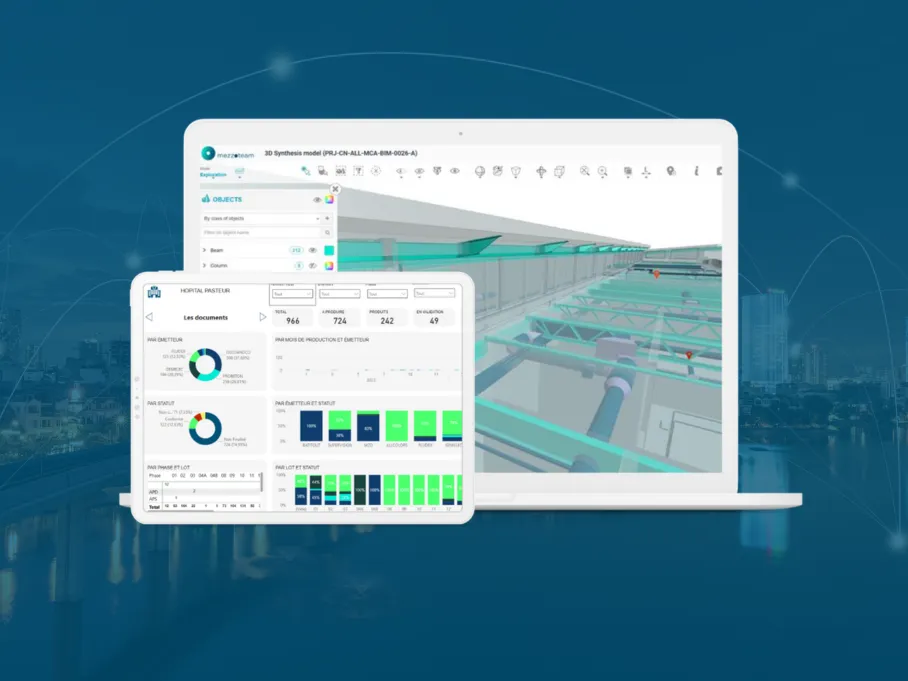
Role of the CDE for the project owner:

Approve deliverables at each phase (preliminary design, detailed design, tender documents, execution, etc.);
Monitor progress and approvals with clear, traceable workflows;
Centralize information to avoid duplicates, lost documents, and untracked email exchanges, thereby ensuring optimal construction document management;
Collaborate with full transparency with project managers, contractors, and other stakeholders.
The CDE thus becomes a strategic governance lever for the project owner, particularly for complex or multi-site operations.
Financial tracking is a cornerstone of project management. Too often managed separately in third-party tools or Excel files, it can now be integrated directly into project management platforms via a finance module.

This module allows you to:
Track budgets in real time, from project launch to handover;
Manage contractual commitments (project management contracts, construction contracts, amendments);
Approve monthly progress reports in a seamless and compliant manner;
Compare expenses against forecasts to anticipate variances and make informed decisions.
The finance module becomes a decision-support tool, ensuring transparency and traceability of financial flows.
Once construction is complete, operations begin. The challenge: maintaining consistency between the delivered structure and its asset data.
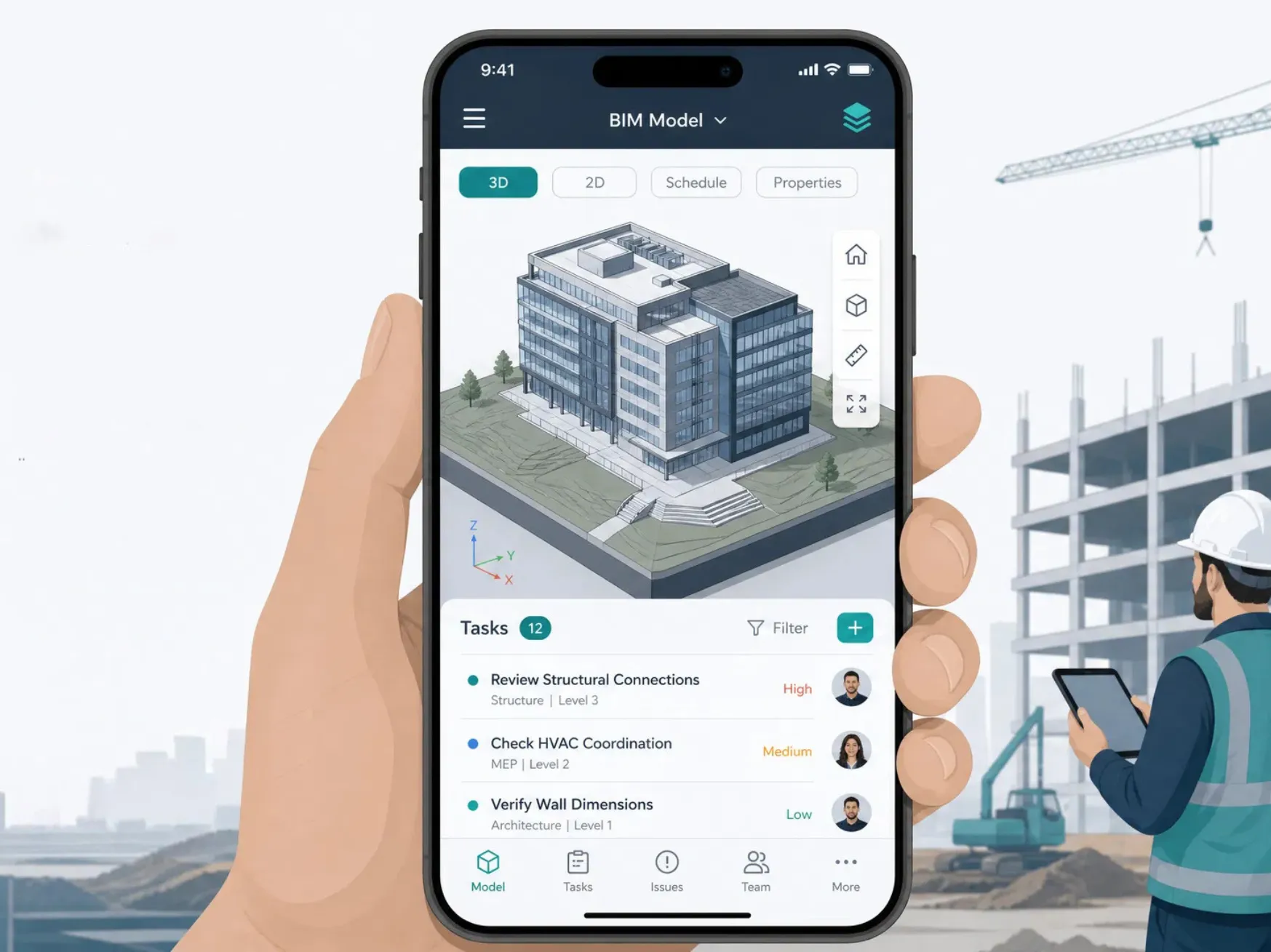
This is the role of the FIELD module, an online project tracking tool designed to:
Centralizing As-Built documentation (DOE);
Ensuring traceability of interventions, repairs, and updates;
Facilitating preventive maintenance by tracking equipment in real-world conditions;
Preparing for future renovations or extensions by easily re-accessing information from the initial construction phase.
With such a tool, the client extends the value of their digital investment beyond project handover.
Data is a strategic asset. However, it must be effectively leveraged. This is where customized dashboards and Business Intelligence (BI) tools come into play.

They offer:
A comprehensive overview of project progress at a glance;
Key Performance Indicators (KPIs) tailored to each project (delays, approvals, risks, costs);
Proactive alerts in the event of deviations;
Consolidated reporting capabilities for real estate departments or portfolio managers.
These tools allow clients to adopt a strategic management posture, relying on reliable, consolidated, and easily actionable data.
A step-by-step transformation
Digitalization cannot be decreed: it must be built step by step, taking into account the specificities of the project, the client's expectations, and the digital maturity of the stakeholders. Here are the key steps to successfully managing this transformation with a methodical approach.
Above all, it is essential to analyze the specific characteristics of the project:
→ Size (small office project or large multi-site operation);
→ Type (housing, public building, infrastructure, etc.);
→ Number of stakeholders (internal teams, project management assistance, design teams, contractors);
→ Regulatory constraints or specific contractual framework (PPP, public procurement, BIM projects, etc.).
This assessment helps identify essential features and prioritize the necessary modules (CDE, finance, field, etc.).

The market is full of project management solutions. To make the right choice, the project owner must rely on clear criteria aligned with their goals and digitization strategy:
→ Ergonomics: the tool must be intuitive and easy for all stakeholders to adopt;
→ Interoperability: ability to communicate with other software (BIM, ERP, e-tendering platforms, etc.);
→ Security: sovereign hosting, data protection, granular rights management;
→ Support and guidance: responsiveness, quality of assistance, availability of resources (tutorials, training).
It is not about choosing the most powerful tool, but the one best suited to the context and the end users.

A successful digital project relies on user buy-in. Without change management, even the best tool can be rejected.
→ Inform and involve stakeholders from the selection phase;
→ Train users on key features;
→ Support skill development with a gradual rollout plan;
→ Designate leads or ambassadors in each entity to ensure continuity.
Successful adoption is often linked to good communication and upfront awareness.

Digitization only makes sense if it is based on clear, shared, and respected processes. It is crucial to formalize:
→ Approval workflows (who approves what, in what order, and within what timeframes);
→ Naming and filing conventions for documents;
→ The responsibilities of each stakeholder at every project phase;
→ The usage rules for the CDE or other modules.
The initial configuration of the CDE (or any other tool) is a strategic moment: it determines the quality of collaboration and the fluidity of communication.
Digitization is an evolving process. Once the tools are deployed, it is important to:
→ Organize feedback sessions at the end of each phase or project;
→ Measure tool effectiveness (productivity, meeting deadlines, information quality);
→ Adapt settings or usage based on actual needs;
→ Capitalize on best practices to improve future projects.
The goal is to create a sustainable digital culture, where every operation feeds into a virtuous cycle of learning and optimization.

The comparison
Digitizing project management is about more than just replacing Excel files with a platform. It is a structural transformation that profoundly changes how the project owner manages projects and collaborates with all stakeholders. Here is what changes in practice.

The tender package (DCE) was scattered across Word and PDF files shared via email;
Approving a plan required multiple back-and-forth emails, with no guarantee that the latest version was the one actually approved;
Project handover used to involve paper binders, hand-signed reports, and as-built documentation (DOE) delivered on USB drives (or not at all).
The tender package (DCE) is consolidated in the CDE, then transmitted directly via an e-tendering platform with timestamping and traceability;
Plans are submitted via a predefined approval workflow, with statuses, tracked comments, and automatic notifications;
Handover is performed on a tablet, with electronically signed reports and structured digital as-built documentation (DOE) directly accessible from the platform.
Result: less time wasted, fewer errors, and more reliable information at every stage of the project.
Thanks to digitalization:
The project owner becomes a central player in the collaboration, with a real-time view of project progress
Process transparency improves trust between parties: everyone knows what they need to do, when, and how;
The project management team has a clear framework for producing, submitting, and getting documents approved;
Companies reduce waiting times and limit misunderstandings, as feedback is centralized and tracked.
Digital tools structure communications and strengthen collective efficiency.

The concrete benefits for the project owner are numerous:
Fewer disputes thanks to complete traceability of communications, approvals, and submissions.
→ Example: in case of a disagreement over a plan, it is easy to find out who approved it, when, and which version was used;
Faster decision-making thanks to automated approval workflows and integrated alerts;
→ No more need to follow up via email or hold meetings just to check the status of a document.
Enhanced legal traceability: digital archiving of communications and approvals provides admissible evidence, which is invaluable in the event of a dispute;
Better knowledge management: project history remains accessible after delivery, facilitating operations, maintenance, or the application of best practices to future projects.
Ultimately, digitalization offers greater control, more peace of mind, and increased value for the project owner.

Learn more
Digitizing project management means gaining visibility, efficiency, and peace of mind. For project owners, it means better collaboration, more effective steering, and improved foresight. It’s time to take action: download our white paper or request a demo to discover how to structure your next project for optimal results.
download the white paper
